
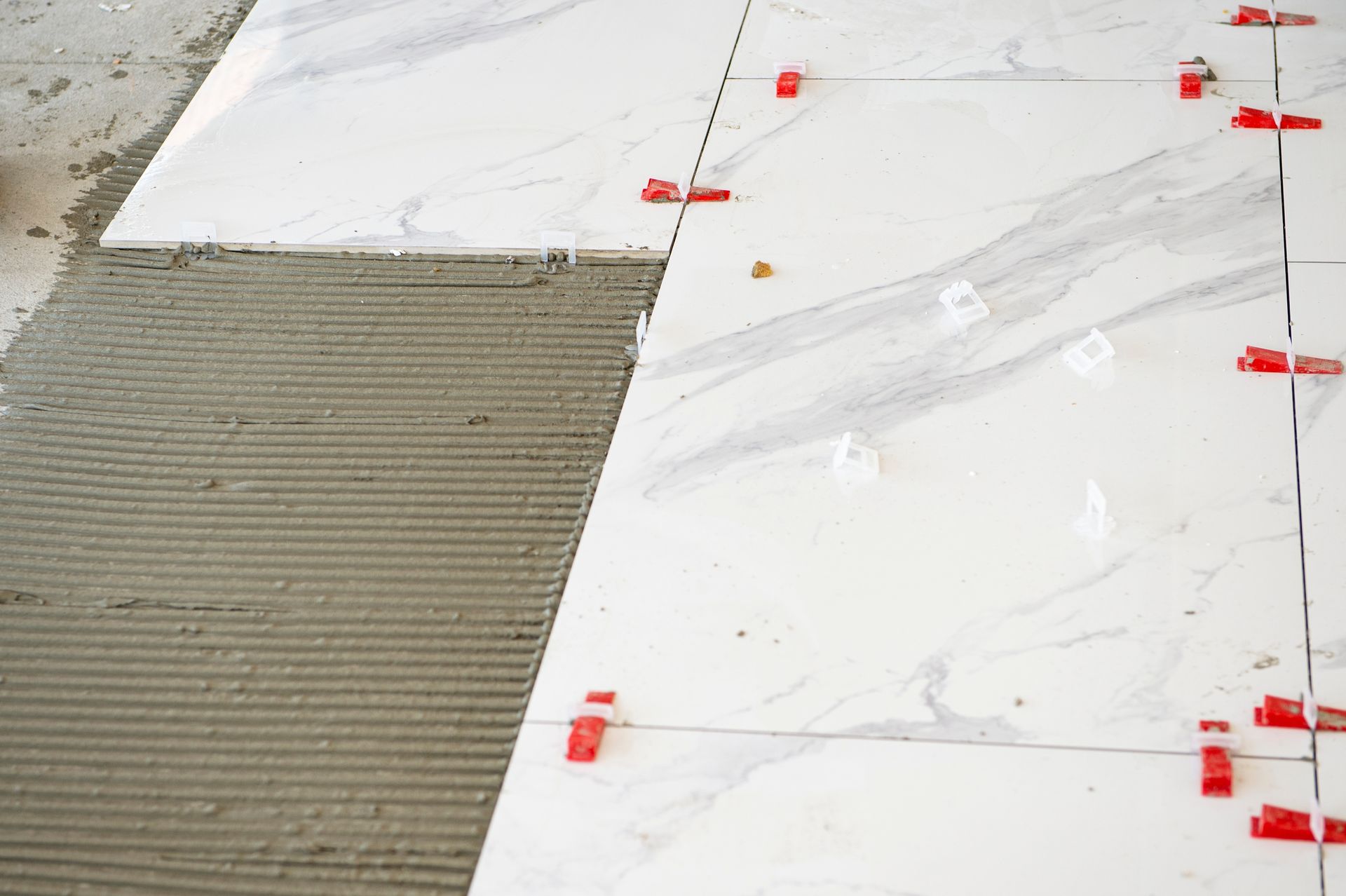
Clean Lines That Handle Water Exposure
Tiling in Tacoma for kitchens, bathrooms, and wet areas requiring durable, moisture-resistant surfaces with precise layout and grout lines
Tile installation in wet areas serves a functional purpose beyond aesthetics—properly set tile with correctly sloped substrate and sealed grout lines prevents water from reaching drywall, subfloor, or framing where it causes rot and mold. Kotilev Construction, LLC installs tile by preparing substrates to meet flatness and waterproofing requirements, laying out patterns that avoid narrow cuts in visible areas, and setting tiles with consistent grout joints that maintain alignment across the entire surface. The difference between tile that lasts decades and tile that fails within years often comes down to whether the waterproof membrane was installed correctly and whether the mortar bed achieved full coverage without voids.
Installation begins with applying waterproof membranes or backer boards rated for wet environments, then spreading thinset mortar in sections small enough to remain workable while each tile gets embedded with full back-butter coverage. Grout follows after the mortar cures, and sealers protect porous grout lines from staining and moisture absorption in high-exposure areas like shower enclosures.
Request a tiling project estimate to review material options and confirm substrate preparation requirements for your specific installation area in Tacoma, Federal Way, Puyallup, and surrounding areas.
The Difference Between Functional and Failing Tile Work
Precision layout ensures that cut tiles at perimeters remain wide enough to avoid a pieced-together appearance, and that grout lines stay consistent in width without wandering or wedge-shaped joints. Kotilev Construction, LLC works with ceramic, porcelain, natural stone, and glass tile, adjusting mortar type and setting techniques to match the material's absorption rate and dimensional tolerances.
Once installation completes, you see grout lines that run straight without width variation, tiles that sit flush without lippage between adjacent pieces, and corners or transitions where cuts align cleanly without chipped edges. Water sheets off the surface and drains without pooling, and the tile remains firmly bonded without hollow-sounding areas that indicate insufficient mortar coverage.
The installation includes sloping shower floors toward drains at the correct gradient, waterproofing all penetrations and corners with reinforcing fabric, and selecting grout formulations that resist mildew in steam environments. Pattern options range from simple grid layouts to herringbone, stacked, or offset designs that add visual interest while maintaining structural integrity.
What Property Owners Usually Ask
Clients planning tile installations want clarity on material performance, layout decisions, and how waterproofing methods protect against the moisture exposure common in Tacoma homes.
What substrate preparation does tile installation require?
Tile needs a substrate that meets flatness tolerances within 1/8 inch over ten feet for floor tiles and 1/4 inch over ten feet for wall tiles, and that includes waterproof membranes in wet areas to prevent water from migrating through joints into underlying materials.
How does grout line width affect performance?
Narrower grout lines reduce the total square footage of absorptive material exposed to water, but tiles with dimensional variation require wider joints to maintain straight lines without forcing misaligned edges together.
What makes tile suitable for high-moisture areas like showers?
Vitreous or impervious tile with absorption rates below one percent resists water penetration, and when combined with properly sealed grout and waterproof membranes, the assembly sheds water without allowing it to reach vulnerable substrates.
When should tile be sealed after installation?
Grout typically requires 48 to 72 hours of curing before sealer application, and natural stone may need sealing before grouting to prevent grout staining, then again after grout cures to protect both surfaces.
How do you prevent tile from cracking over time?
Crack prevention involves using mortar with appropriate flexibility for the substrate, installing uncoupling membranes over subfloors prone to movement, and leaving expansion joints at transitions between tile and other materials or at large field areas.
Kotilev Construction, LLC integrates tiling with broader remodeling projects, coordinating waterproofing, substrate prep, and finish installation to ensure each layer performs correctly. Set up a consultation to review your tiling project and discuss material and pattern options suited to your space.